Suffrage, Uncategorized, Women in Business

Oxymoron or just moronic?

Have you read the one about the ‘mass of unprepared women (who) will suddenly find themselves in senior jobs’ if the Male Champions of Change have their way? Apparently Mark Lawson in Friday’s Fin Review thinks that ‘while affirmative action always sounds like a good idea… it is doubtful whether women are interested in these senior jobs’. Generous people have suggested he is being ironic. I thought perhaps he was being moronic.

While it may seem very funny to suggest that women can’t hold down senior jobs because “A common corporate story is that of talented, capable, highly skilled women who will have one child and come back after six months off, then have a second child and only be interested in part-time work” (Mark Lawson, Financial Review) perhaps there should be some suggestions about taking the emphasis off of women so that child care is a family issue shared by parents rather than heaped on the shoulders of mothers.  And surprise surprise… there are working women who don’t have children! It’s amazing but true!

As to the ‘mass of unprepared women’ – I’m sorry but I can’t think of a single one.   All the women I know are prepared for just about anything. Except perhaps the constant onslaught of media misogyny – we can still be caught somewhat unprepared for that.

PS: Here is the link if you’re like to read it.

Australia, Suffrage, Uncategorized, Women in Business

After Margaret Thatcher: No Turning Back

margaret thatcher

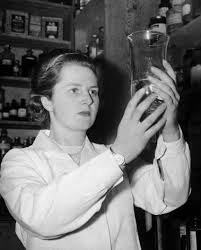
I read with some sadness of the death of Margaret Thatcher at the ripe old age of 87. What a good innings she had even if her last few years were troubled by dementia. I also read with interest the comments that she was ‘unique’, ‘one of a kind’ and therefore unlikely to be replicated. Is it to early to say I beg to differ?

One of the surprising things about women in positions of power is that … well, when we get there we often do very well. This seems surprising to some parts of the community who show considerable consternation when a woman is appointed to a tough top job. What? A women? At the head of a government (or company, or department) making brave decisions? Must be a one-off. She must be unique. But she wasn’t and she’s not – at least in terms of women who know what they are doing and what they want.

images2

I am forming a theory that what’s really scary (for some) about women in positions of authority, for example female prime ministers, is that they actually do a very good job. Now that’s not to say they don’t make unpopular decisions or that they don’t break their word (just like their male counterparts) but they are strong-willed, determined, often very good leaders and highly resilient. And there are more and more of them and that is what is making some of our (XY chromosome) community extremely nervous. Clever, well placed women are often very, very efficient and very, very much here to stay.

Some examples: Angela Merkel: Ms Merkel, at 58, is a German politician who has been the Chancellor of Germany since 2005, and the Leader of the Christian Democratic Union since 2000. She is the first woman to hold either office. Big boots to fill I’d say. http://en.wikipedia.org/wiki/Angela_Merkel
Hillary Clinton
And what about Hilary Clinton? Once she got out from under the ‘First lady’ tag, did she take up knitting ? She did not. She was the 67th United States Secretary of State from 2009 to 2013, under President Barack Obama and a United States Senator for New York from 2001 to 2009. And closer to home, we cannot ignore our own Prime Minister. Love or hate her political leanings (or anyone else’s), becoming the first woman Prime Minister of Australia is no small feat and she was the Leader of the Australian Labor Party from 2010. She is the first woman to hold either office.

con-bri-02-image01<
And away from the pollies: Oprah. She's known just by her first name: that's a very good start and for her self-titled, multi-award-winning talk show "The Oprah Winfrey Show" which was the highest-rated program of its kind in history and was nationally syndicated from 1986 to 2011. She has been ranked the richest African-American of the 20th century, the greatest black philanthropist in American history, and was for a time the world's only black billionaire. She is also, according to some assessments, the most influential woman in the world.[There are so many more who were inventors, scientists, doctors… It was a woman who invented Liquid Paper, Bette Nesmith Graham; Lady Mary Wortley Montagu created the first smallpox vaccine; Rosalind Franklin played a pivotal role in mapping out the double helix of DNA in the 1950s; Helen Greiner cofounded iRobot-a packbot that dismantles explosives (source: http://lifestyle.allwomenstalk.com/things-women-invented-first/) Randice-Lisa Altschul invented the world's first disposable cell phone and who can forget Marie Curie who discovered radium and furthered x-ray technology.

“To those waiting with bated breath for that favourite media catchphrase, the U-turn, I have only one thing to say, you turn if you want to. The lady’s not for turning” – Speech at Conservative Party conference, 1980.

Of those who believe that a successful, powerful woman must be an aberration,get ready for a shock. It is time to accept that strong women are and will increasingly be appointed to positions of power all over the world. And to paraphrase the Baroness, there’s no turning away from that.

Australia, Business Strategy, Corporate sponsorship, Economy, fundraising, Melbourne, Not for Profit Sector, partnerships, philanthropy, Uncategorized, Women in Business

What’s in a name? that which we call a Fundraiser by another name would it be as sweet?

Apologies to Shakespeare… But I’m pondering: Why do we call Fundraisers… well, Fundraisers?  Yes we do the action of raising funds … but that is so much only a part of the end result. What we do more than just raise dollars is build long term relationships and help philanthropists deliver on their own philanthropic goals.

In doing that we must do so much more that is often overlooked in the focus on the bottom line.

If you hire a Sales Person for your sales team, you want certain specific things from them in terms of meeting budget goals and building client relationships.  And clients hopefully are getting a product they want and need in exchange for their cash.

And yet a Fundraiser often must manage more than you’d expect from a sales person and it’s time we found a new description of this much misunderstood role. As a Fundraiser,  if you are to be successful in encouraging others to donate their time, talent and in particular treasure to an organisation, any fundraiser must learn an entire range of skills hidden in the term ‘fundraiser’ .

If you’ve ever met a great Fundraiser then you’d know that we are the sum of many parts. They are often good people managers, good financial managers, have a strong understanding of strategy: can take a helicopter view of a business to understand not just its financial needs but its priorities and urgencies.  They learn how to build long term relationships;  must learn how to recognise a philanthropist’s needs and goals and try to match them with their organisation’s needs and goals. It’s a tricky, sensitive business and one that takes maturity, knowledge and understanding of the role philanthropy plays in any non-profit business’s success.

Perhaps worrying about the title is a red herring. As with many things, it starts with the brief when a recruiter is starting to look for someone who can raise funds.

1. Forget the title: Look for relationship people – that is those who understand other people AND understand money and how it works within a business. 

2. Look for those who understand how to put together a strategic plan and can explain the organisation’s priorities to potential donors.

3. Look for those with a track record – yes, the bottom line does come into it, it’s just not the only thing.

4. Look for a link to your cause. Does the potential recruit really care about what you’re doing.

Just because I started this off looking at the title, I’d like to suggest a few alternative (nice) names for fundraisers:

Chief Relationship Officer; Strategic Prioritiser; Philanthropic Advancer, Bonding Adviser….

Perhaps the US has become more inventive – whatever we call them, fundraisers deliver a very valuable service to our non-profits and I believe it could be time we gave a higher recognition to their varied skills. They bring more to most organisations than just dollars. But as a ‘Strategic Prioritiser’ myself, perhaps I have a bias view. Over to you.


Australia, Uncategorized, Women in Business

Dont ask permission (or forgiveness)!

It’s International Women’s Day and I’m mad. No not that sort of mad… I’m assertive, vexed, inquisitive, willing to put the elephant in the corner on to the top of the table and point at it in an annoying way. In a word, I’m being unashamedly Woman and I’m not asking permision or forgiveness.

Sadly, there are so many women in the world who do not have the strength, financial capacity or forum to fight for their rights safely. Australian women have so much of that and yet…  two examples of it today of a sort of unspoken need to have men’s approval of our wants and needs: At an international women’s day breakfast, the (50:50 male female panel) discussed why women were ‘different’ how we can deliver a ‘softer’ side to the boardroom….! Am I in 1952? I heard a senior officer (male) from the Australian army talk on the radio about how he was going to Washington for IWD to talk about getting more women into the Australian armed forces. Was it only me who noticed the irony of the Australian Army NOT sending a women on this mission

“The strength of a woman is not measured by the impact that all her hardships in life have had on her; but by the extent of her refusal to allow those hardships to dictate her and who she becomes.” 
―    C. JoyBell C.

We’ve made huge strides forward; we’ve made change happen. But it is time – now more than ever – to take off the gloves and push in to spaces where we are not wanted, where we will be deliberately provacative by our mere presence and we stand and face what ever is thrown at us.

I wish all women a happy and inspiring International Women’s Day. Be proud of everything you and we have done and everything we will do. With or without permission.

Business Strategy, partnerships, Uncategorized, Women in Business

Power and Women

Are you a woman ready to take over the world? If so, now is your time.

In a speech in Peru, Secretary of State to the US Hillary Clinton talked about women and economic growth and states that restrictions on women’s economic participation are costing the world massive amounts of economic growth and income in every region of the world. You can read her speech here.
The question I ask is how do we harness women’s power? How do we work together to encourage more collaboration, recognition and support for the economic and human powerhouse that is represented by the women of the world?
In a Special Report produced exclusively for The Wall Street Journal
Executive Task Force for Women In The Economy 2011, Unlocking the full potential of
women in the U.S. economy,  it was recognised that women have been a growing factor in the success of the U.S. economy since the 1970s. The additional productive power of women entering the workforce since then accounts for about a quarter of current GDP.
But the full potential of women in the workforce has not yet been tapped. Now, it is critically important to do so: According to McKinsey’s the U.S. struggles to sustain GDP growth rates, it needs to bring more women into the workforce and fully deploy high-skilled women to drive growth through productivity improvements.
How do we leverage this fantastic resource? As a crude analogy, imagine all women represent a massive oil reserve, or huge coal deposits. I dont think we’d be left in the ground! We have huge, hidden, untapped potential. Let’s join together to leverage the hell out of us! And along the way, maybe take back the world.

Business Strategy, Corporate sponsorship, fundraising, Not for Profit Sector, partnerships, philanthropy, Women in Business

10 Tips to great relationships

10 ways to prepare for partnering

Thinking about entering the corporate partnership space or improving your results in this area? Pamela Sutton-Legaud suggests some things you should have in place before going to market.

The following are ten tips you may like to consider, which will save you and your potential sponsor time, money and energy. It’s better to proactively determine these points rather than to be unprepared when a potential partnership opportunity arises.

1. Allocate responsibility for partnerships. Allocate a team or team member who has, as part of their job description and key performance indicators, the responsibility to deal with and negotiate corporate partnerships. This is particularly important in organisations that have a range of entry points, to ensure all potential partners are consistently appraised and receive the appropriate level of benefits to reflect the level of partnership.

2. Define organisational values for partnerships. Assist your staff by working with your board or executive team to create a corporate sponsorship policy which details what sort of industries conflict with or enhance your core values. Using an obvious example, if your organisation aims to assist people struggling with addiction, be explicit whether you will accept funds from tobacco companies, alcohol companies or gaming companies.

3. Create a selection criteria framework for sponsor partnerships. In support of your policy, it helps to create a sponsorship framework which outlines how you will select or accept new partners, how to acknowledge donors/sponsors and what you can give back in terms of value for their sponsorship dollars. Consider if you receive $5,000 or $500,000 gift – what could you offer to a sponsor at various levels of support? While each sponsor has different needs and requirements, you can develop some basic guidelines to get the conversation started. Defining this early – and the benefits that do/don’t come with each – can save a lot of headaches down the line.

4. Prepare a partnership benefits overview. Prepare a short guideline document to provide to any sponsor who should approach you which provides an overview of how you work, what you can offer, and why you’d be a great partner, as well as any selection criteria that you would apply to any sponsorship application. It allows you to respond to any requests quickly and professionally. It also allows a potential sponsor to self determine how good a fit they are with you, your stakeholders or audience.

5. Evaluate prospective partners’ organisational fit. Consider which types of organization are ‘natural’ and ‘unnatural’ partners for your cause. At Zoos Victoria, we are a natural fit with organisations that wish to engage with a large family audience, as almost two million people visit our zoos annually. So, fast moving consumer goods organisations or those focused on a consumer audience are a good ‘natural’ fit. As such, when Zoos Victoria entered into a partnership with ANZ bank, this was a very natural fit for both parties as our audiences and values were well matched.

6. Look for a values match. It’s important to be explicit about your own organisation’s values and review how they align with a prospective partner. Zoos Victoria takes a G-rated approach to our family audience so we want to collaborate with organisations with similar values. We are also a nonprofit conservation organisation, so we want to work with organisations that are likeminded and consider the impact of their actions and those of their customers on the environment. We’re here to protect and defend endangered species and we want to work with those organizations that actively support this goal.

7. Consider the value/effort of possible partnership. Nonprofits are time poor and relationships are time intensive, so it makes sense to evaluate the effort to reward ratio of a prospective partnership. Zoos Victoria uses a simple but powerful decision making framework which offers a simple way to assess a potential partnership activity. We look for partnerships and activities that sit in that top left hand corner – the ‘sweet-spot’ of low-medium effort for high value. This works in everyone’s favour.

8. Aim for multi-year partnerships. Wherever possible, look for multi-year partnerships to make the most of the work that goes into a partnership agreement on both sides. Negotiating multi-year partnerships allows time for the relationship to form and grow, while assuring partnership goals are met along the way. Good results come from time and reasonable levels of effort.

9. Record each partner’s goals. Create clear goals and don’t be afraid to clarify all the key outcomes of the partnership in a written sponsorship agreement. It is much easier to clarify your partnership benefits and commitments at the beginning of the relationship, than half way through.

10. Implement a regular review process. With clearly written up goals in place, you should regularly review the partnership’s progress against expectations to evaluate whether it’s meeting each partner’s expectations and take steps to improve on the relationship where possible. With this approach you can create enjoyable, mutually-beneficial relationships that continue for many years through open communication.

Pamela Sutton-Legaud
Pamela Sutton-Legaud is the Executive Director of the Zoos Victoria Foundation and leads the strategic direction for institutional and individual giving for Werribee Open Range Zoo, Healesville Sanctuary and Melbourne Zoo which celebrates its 150th anniversary in October 2012.

1st Published in Fundraising & Philanthropy Magazine 2012

Australia, Business Strategy, Not for Profit Sector, Women in Business

Values driven Value

I’m working on an idea that if for profit businesses are all about delivering value, then not for profit enterprises are about delivering on values. In 2012 and beyond we may see more of these two elements combining to bring about the values driven business. Money driven social enterprise if you will.

Consumers are looking for businesses that have sustainable business practices, that are ‘gentle’ on the environment, that utilise local resources rather than outsourcing everything overseas and are activity contributing to the positive health of community through their core business.

Since their invention, companies have focused on creating shareholder value as their primary objective. Consumers however are looking to those companies in an attempt to measure their shared values to see if they are the sorts of company their want to do business with. Shareholders too are looking at businesses to see if they ‘fit’ not just if they’ll fly financially. It’s not all about the mighty dollar any more.

For too long commercial organisations have tried to show how much they ‘care’ about the community by creating corporate social responsibility programmes (CSR) with the aim of offsetting some of their less positive activities (such as digging large holes in the ground, cutting down trees. filling our air with smog etc) or to emphasise their efforts to contribute to their community by promoting their charitable giving or the volunteering efforts of their staff. All of these things run along side their actual raison d’être. In the worst cases, these programmes are often add-ons and little more than lip service for some organisations. It’s something corporations have to be seen to be doing in order to be seen as good corporate citizens.

However the world is changing and consumers are asking for something more. It is not enough that businesses make good on their less popular actions by offsetting with ‘good works’. Consumers are looking for companies to change their business models so that their core business actions change. Make money but do it without destroying the planet and without destroying ‘my’ local community in particular.

In the past non-profit organisations were the ones which, by focusing on what is important to their constituents and stakeholders: their values, attempted to address the social imbalances of the world by helping to provide clean water, housing, medicine to the poorest of communities, protecting endangered species. At the same time, in part due to their use of the public purse, they are required to be come more efficient, more business like. Commercial businesses are behaving in their practices more like for-profits and in turn, commercial organisations are re-examining their modus operandi to determine what really matters and the way they make money; in effect becoming more like non-profits. What we’ll see is a merging of these two into a hybrid for-profit, for purpose organisation that is in the business of making money while at the same time attempting to address the key social issues of our time: poverty, health, inequality, education. Is this what is meant by social entrepreneurship?

More on this later. Comments?

Business Strategy, Not for Profit Sector, Tigers, Women in Business

Trading Places

A few times I’ve been asked by people wanting to change career direction whether they should take a job in the not for profit sector. I thought you might be interested in a few (there are lots more) things you’ll encounter if you make that choice. Love to hear your comments.

  1. It will mean working with lots of inspirational women! What is it about the NFP sector that attracts women? Cynically I could argue that they’ll put up with the lower pay scales more readily than men! However, they also work very hard and put the cause right out in front as a beacon of hope and energy. I love the women working in our sector, they are so inspirational! Some of the women board directors I’ve met are absolutely driven and fantastic mentors.Image
  2. It won’t be easy! A few hopeful but misguided souls consider a move to a nonprofit organisation will mean that life won’t be as stressful or busy as working for a commercial business. (I recall the job candidates who when asked why they’re considering a job in the NFP world answer “I’m looking to slow down a bit!” Not likely!) It might actually be a bit more stressful! You may have fewer resources including staff and money and you may be working on issues that create emotional stresses – like considering the needs of children living in poverty or those dealing with cancer or depression.
  3. It will be more rewarding! Almost certainly if you choose an organisation that follows a cause not led by the balance sheet, you will find it rewarding. How much more rewarding depends on how much you put into it and how much the cause matters to you.Image
  4. It will mean coming face to face with your own values! What matters to you? What gets you up in the morning? What drives you and makes you angry/motivated and ready to take on the world? Find the organisation that meets your values and you’ll have found your cause.
  5. It will mean asking others for money! If you are unsure if you are ready to ask others to financially support your cause, you may not want to work in the sector. Government funding is always limited and donor funding is often fickle so no matter what your role from scientist to receptionist, you will one day be asked to help out with fundraising. It’s not hard but it can appear to be confrontational. You’ll learn that by encouraging others to give, it’s a great way of connecting them with their values. A worthy cause indeed.