Uncategorized

Kicking off in Ubud…

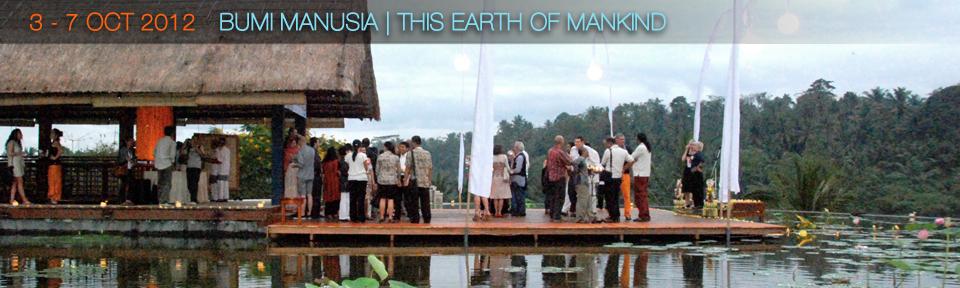
It’s all happening in Bali at the Ubud Writers’ Festival. A fantastic lineup of speakers, workshops and special events.

I’ll be attending for the first time this year and I am SO excited. A chance to experience a completely different culture, enjoy beautiful weather and be around great talent. What could be better?

If you are going to be there, or you have some recommendations about Ubud and or Bali, please drop me a comment or a quick line. I’d love to hear your Ubud stories.

Ubud Writers Festival

Uncategorized

Sharing UPPERCASE

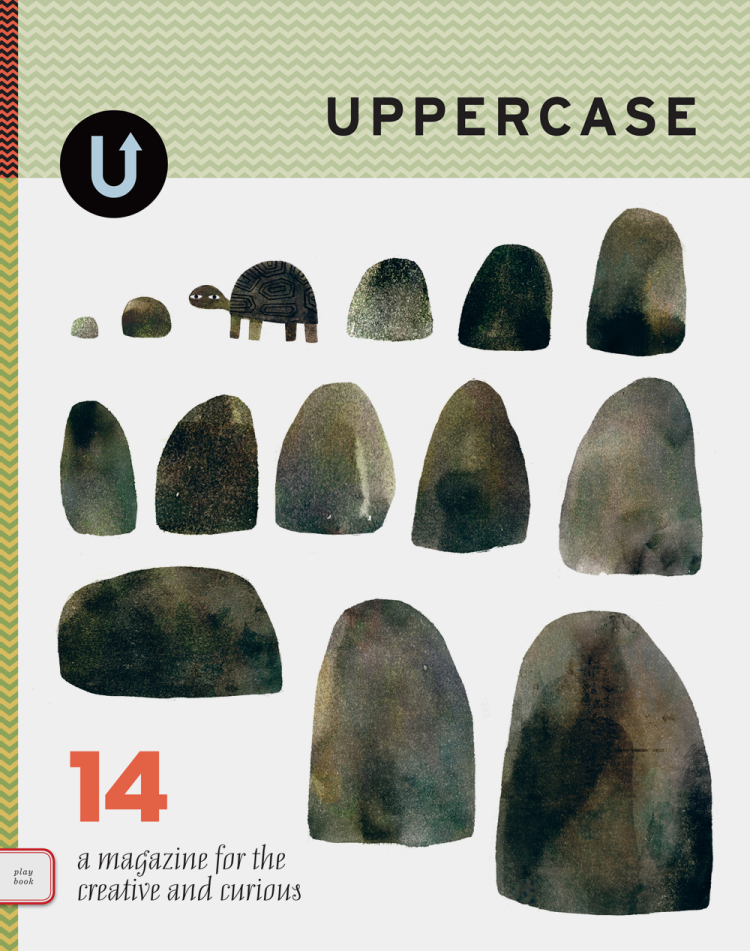
Hi, I came across a magazine UPPERCASE while browsing through the stack in our communal office kitchen.

UPPERCASE the publishing house is self-described as “publishing books and magazines for the creative and curious: products that spark the imagination and inspire creativity. Our eponymous magazine, now in its fourth year, is loved by readers around the world and has been recognized for its design excellence. Our books profile up-and-coming artists or explore emerging trends in design and creativity”

Who could resist a design magazine for the ‘creative and curious’. I found it has a personality all its own and while I’ve only read one issue, I’m a big fan. The blog associated with the magazine is informative and engaging and very quirky. Interestingly, the editors encourage interactivity with readers and subscribers in a way that is often now only seen online.

I encourage you to view UPPERCASE, read it, engage with it and probably subscribe to it.

Isn’t it nice when you find something that instantly makes you happy, even in a small way? When I do find something I like, I like to share it. Love to hear your comments.

Business Strategy, Corporate sponsorship, fundraising, Not for Profit Sector, partnerships, philanthropy, Women in Business

10 Tips to great relationships

10 ways to prepare for partnering

Thinking about entering the corporate partnership space or improving your results in this area? Pamela Sutton-Legaud suggests some things you should have in place before going to market.

The following are ten tips you may like to consider, which will save you and your potential sponsor time, money and energy. It’s better to proactively determine these points rather than to be unprepared when a potential partnership opportunity arises.

1. Allocate responsibility for partnerships. Allocate a team or team member who has, as part of their job description and key performance indicators, the responsibility to deal with and negotiate corporate partnerships. This is particularly important in organisations that have a range of entry points, to ensure all potential partners are consistently appraised and receive the appropriate level of benefits to reflect the level of partnership.

2. Define organisational values for partnerships. Assist your staff by working with your board or executive team to create a corporate sponsorship policy which details what sort of industries conflict with or enhance your core values. Using an obvious example, if your organisation aims to assist people struggling with addiction, be explicit whether you will accept funds from tobacco companies, alcohol companies or gaming companies.

3. Create a selection criteria framework for sponsor partnerships. In support of your policy, it helps to create a sponsorship framework which outlines how you will select or accept new partners, how to acknowledge donors/sponsors and what you can give back in terms of value for their sponsorship dollars. Consider if you receive $5,000 or $500,000 gift – what could you offer to a sponsor at various levels of support? While each sponsor has different needs and requirements, you can develop some basic guidelines to get the conversation started. Defining this early – and the benefits that do/don’t come with each – can save a lot of headaches down the line.

4. Prepare a partnership benefits overview. Prepare a short guideline document to provide to any sponsor who should approach you which provides an overview of how you work, what you can offer, and why you’d be a great partner, as well as any selection criteria that you would apply to any sponsorship application. It allows you to respond to any requests quickly and professionally. It also allows a potential sponsor to self determine how good a fit they are with you, your stakeholders or audience.

5. Evaluate prospective partners’ organisational fit. Consider which types of organization are ‘natural’ and ‘unnatural’ partners for your cause. At Zoos Victoria, we are a natural fit with organisations that wish to engage with a large family audience, as almost two million people visit our zoos annually. So, fast moving consumer goods organisations or those focused on a consumer audience are a good ‘natural’ fit. As such, when Zoos Victoria entered into a partnership with ANZ bank, this was a very natural fit for both parties as our audiences and values were well matched.

6. Look for a values match. It’s important to be explicit about your own organisation’s values and review how they align with a prospective partner. Zoos Victoria takes a G-rated approach to our family audience so we want to collaborate with organisations with similar values. We are also a nonprofit conservation organisation, so we want to work with organisations that are likeminded and consider the impact of their actions and those of their customers on the environment. We’re here to protect and defend endangered species and we want to work with those organizations that actively support this goal.

7. Consider the value/effort of possible partnership. Nonprofits are time poor and relationships are time intensive, so it makes sense to evaluate the effort to reward ratio of a prospective partnership. Zoos Victoria uses a simple but powerful decision making framework which offers a simple way to assess a potential partnership activity. We look for partnerships and activities that sit in that top left hand corner – the ‘sweet-spot’ of low-medium effort for high value. This works in everyone’s favour.

8. Aim for multi-year partnerships. Wherever possible, look for multi-year partnerships to make the most of the work that goes into a partnership agreement on both sides. Negotiating multi-year partnerships allows time for the relationship to form and grow, while assuring partnership goals are met along the way. Good results come from time and reasonable levels of effort.

9. Record each partner’s goals. Create clear goals and don’t be afraid to clarify all the key outcomes of the partnership in a written sponsorship agreement. It is much easier to clarify your partnership benefits and commitments at the beginning of the relationship, than half way through.

10. Implement a regular review process. With clearly written up goals in place, you should regularly review the partnership’s progress against expectations to evaluate whether it’s meeting each partner’s expectations and take steps to improve on the relationship where possible. With this approach you can create enjoyable, mutually-beneficial relationships that continue for many years through open communication.

Pamela Sutton-Legaud
Pamela Sutton-Legaud is the Executive Director of the Zoos Victoria Foundation and leads the strategic direction for institutional and individual giving for Werribee Open Range Zoo, Healesville Sanctuary and Melbourne Zoo which celebrates its 150th anniversary in October 2012.

1st Published in Fundraising & Philanthropy Magazine 2012

Australia, life balance, Uncategorized

Sunday mornings can be murder

I switched on my television around 10am this Sunday morning to watch something inconsequential while I ate my porridge. What I saw made me reach for my remote control and stop eating my porridge and wondered, not for the first time, what a strange community we have become.

I saw: a man, being viciously, slowly strangled by another man, while a baptist preacher looked on. They were all standing in a river. A communal baptism had been underway and this happy event had been interrupted by the murder. All of the participants of the baptism looked on in shock and horror and had grimaces on their faces that pretty much matched the one on my own at that moment.

The images continued for another 10 or so seconds before I managed to find the remote and switch it off . The final scene was of the murderer showing his police badge to the immobile onlookers. A policeman had committed this murder on a Sunday morning.

It was drama. It wasn’t real. But everyone involved showed the shock of the moment when a man apparently died in front of our eyes. And I don’t mean they gave the impression that a murder had taken place a la Hercule Poirot or Agatha Christie. It was fully detailed with every eye bulge on full display. Is this acceptable? Yes I can switch it off, no it’s ‘not real’. But is it acceptable? Or reasonable to switch on to something like that with no warning, no disclaimer … danger, danger… you are about to see something horrible the memory of which will stay with you most of the day.

It seems immoral or perhaps just incredibly sad to be able to watch these terrible incidents early on a Sunday morning or perhaps any morning. If one was to actually commit this type of offence, you’d get 25 years to life if you’re caught. But you can watch someone simulate it. At 10am in the morning and with regular repeats.

I can choose what I watch and don’t watch but that doesn’t stop it being shown for anyone else to watch, and absorb or get upset about or perhaps even worse, to accept it as … normal which it seems it is swiftly becoming.

Perhaps in future, I’ll eat my breakfast outside in the garden with my cats for conversation – they are generally much more entertaining and understand what is required to make your morning turn into the right sort of day.

Australia, Mars, NASA, Uncategorized

Mars…just the beginning

Image from nasa.gov
Love this photo of Pres Barak Obama calling Mars from Airforce 1. Copyright nasa.gov

So far, the reality of the achievement of our Mars landing by ‘Curiosity’ has yet to sink in. The photos are a little fuzzy and there’s just a little human curiosity about what will be found apart from a few uber-geeks (I may or may not relate to that)
But wait. It’s not so much about the destination but the journey. What have we learned to do on the journey to be able to make this landing possible?
Curiosity was designed and tested using Siemens software as an example – one can only imagine what they’ve learned from the experience and what the next generation of Siemens products will look like based on this amazing achievement.

And then there’s the possibility that they will find something alive out there. Yes okay it might be a microbe (and not an entire generation of 2 metre tall, green Martians ready to take over the world a la War of the Worlds), it will still be very, very exciting. It will mean, even if its just a microbe, that we are not alone. There is something else out there that didn’t come from our planet and was created in a way we know nothing about.
And what will that do to us to learn that.
I like this type of space exploration as it makes me think that we are investing in our universal knowledge. I am less happy about the space exploration that involves mining asteroids – why do we want to blow stuff up all the time?! You cant learn much from stuff you keep exploding!
Anyway, I digress. I’m ready to buy my ticket on the first inter-planetary (Virgin Galactic?) passenger craft. Let’s keep peacefully exploring and learning and finding ways to make our life on this planet a bit better by the discoveries we make along the way. I love it that Pres. Barak Obama made a call to Mars. It’s all so Star Trek New Generation! Go NASA. Go Curiosity. You little beauty.

Australia, Business Strategy, Not for Profit Sector, Women in Business

Values driven Value

I’m working on an idea that if for profit businesses are all about delivering value, then not for profit enterprises are about delivering on values. In 2012 and beyond we may see more of these two elements combining to bring about the values driven business. Money driven social enterprise if you will.

Consumers are looking for businesses that have sustainable business practices, that are ‘gentle’ on the environment, that utilise local resources rather than outsourcing everything overseas and are activity contributing to the positive health of community through their core business.

Since their invention, companies have focused on creating shareholder value as their primary objective. Consumers however are looking to those companies in an attempt to measure their shared values to see if they are the sorts of company their want to do business with. Shareholders too are looking at businesses to see if they ‘fit’ not just if they’ll fly financially. It’s not all about the mighty dollar any more.

For too long commercial organisations have tried to show how much they ‘care’ about the community by creating corporate social responsibility programmes (CSR) with the aim of offsetting some of their less positive activities (such as digging large holes in the ground, cutting down trees. filling our air with smog etc) or to emphasise their efforts to contribute to their community by promoting their charitable giving or the volunteering efforts of their staff. All of these things run along side their actual raison d’être. In the worst cases, these programmes are often add-ons and little more than lip service for some organisations. It’s something corporations have to be seen to be doing in order to be seen as good corporate citizens.

However the world is changing and consumers are asking for something more. It is not enough that businesses make good on their less popular actions by offsetting with ‘good works’. Consumers are looking for companies to change their business models so that their core business actions change. Make money but do it without destroying the planet and without destroying ‘my’ local community in particular.

In the past non-profit organisations were the ones which, by focusing on what is important to their constituents and stakeholders: their values, attempted to address the social imbalances of the world by helping to provide clean water, housing, medicine to the poorest of communities, protecting endangered species. At the same time, in part due to their use of the public purse, they are required to be come more efficient, more business like. Commercial businesses are behaving in their practices more like for-profits and in turn, commercial organisations are re-examining their modus operandi to determine what really matters and the way they make money; in effect becoming more like non-profits. What we’ll see is a merging of these two into a hybrid for-profit, for purpose organisation that is in the business of making money while at the same time attempting to address the key social issues of our time: poverty, health, inequality, education. Is this what is meant by social entrepreneurship?

More on this later. Comments?

Australia, life balance, Uncategorized

Live life then blog

It’s commendable that you’re reading this however, is there any risk that you (and I) are letting reality enhancing technology replace reality?
There are some suggestions that members of the Australian Olympics team spent too much of their time pre-competition blogging, skyping and social networking about what they were going to do before they’d done it when perhaps they should have been training or resting.
Are we spending too much time living our lives on-line to the real detriment of our actual lives? If blogs and commentary become all about what we might do or just reflect on what someone else is saying on another on-line space, do we risk thinking that on line is actually better than life?
On an old UK science-fiction/comedy tv show, Red Dwarf, one episode had the characters playing a virtual reality game called just that : Better than life. While they played, they failed to eat, drink or sleep. They logged on to BTL and logged out of reality. Their bodies almost died while they played a better life in their heads. A computer-intervention (ironic!) showed them the exit back to a more mundane but nonetheless real existence and thereby saved their lives.
Are we at risk of this fate? If so, our computers are unlikely the benign type that will ‘wake us up’.
I leave you to ponder the results of our swimmers and other athletes and decide for yourself. I have to go and have lunch with my husband. In the real world.
Uncategorized

Women’s agenda or cashing in?

Smart Magazine, an business ezine  has started a sister ezine rather pointedly named ‘Women’s Agenda’. Initially, I thought, good idea. An ezine targeting women in business. Then I wondered if it would be more likely targeted at that oft-cited group the yummy mummies, more concerned with where to buy the best light-weight pram so you can push it with one hand while texting on your iphone with the other than how to take over the corporate world. It remains to be seen which one this will turn out to be. Certainly an ezine for smart women should cover lots of territory. An ezine for smart business women is needed and welcomed. IF the zine itself is also smart and not just cashing in on ‘women’s business’, that would be very good indeed. Anyway, if you sign up to their mailing list you go in to the running for an ipad. See for yourself. http://comingsoon.womensagenda.com.au/win-an-ipad/

Uncategorized

Intelligent Thinking? Just do it.

Intelligent Thinking
While travelling back from an overseas holiday, on the plane I saw a movie ‘Limitless’ where a down at heel, blocked writer is given a drug that boosts his intelligence by allowing him to access more of his brain. He becomes quicker, more aware, smarter. He finishes his novel in a week and makes a couple of million on the stock market just as fast.

It made me think about whether it was intelligence he gained or rather a more heightened state of motivation and a loss of fear. He essentially took a series of actions and didn’t worry too much about the risk involved (sometimes stupidly but hey, that’s drugs for you!).
That sense of ‘cant fail’ is a powerful one and can get you doing things you have the capability to do but were too afraid to try. So i thought about the results he achieved and some of the actions he took and considered whether, by following those actions, anyone could get the benefits without the chemicals.
So. Here’s what he did:
1. Clean your house: he was living in squalor. No wonder he couldn’t write. Many people will tell you your external environment can reflect your internal state of being. If you’re living in a pigsty of confusion and mess, what is your brain doing? So consider cleaning up your apartment, house, office or desk before you set to work on your next big project. If nothing else, you’ll feel better when you continue to procrastinate. And hey, maybe you really will get inspired to work.
2. Focus on one thing: having multiple projects on the go is certainly how I go about things but if you really want to get something done, focus and concentrate on one thing at a time before moving on to the next thing. It’s the jumping from one thing to the next that prevents one from getting things done. I’ve found (and so did our hero) that it works to focus on achieving a goal. E.G. 1 page of your novel a day; one garden bed weeded; a first draft of that report. Focus and don’t stop til you achieve your goal no matter how small.
3. Look for opportunities where others see only the negatives: Our hero in Limitless looked for stock opportunities in a falling financial market. Ok he could watch three computer screens of data at once and absorb columns of numbers in a single glance but even without these powers, we could all do some work on identifying the gap in the market and the market in the gap. Read up, watch the papers, raise your awareness of what’s happening in your world.
4. Know thine enemy: Again, our hero knew what his competitors were doing and could respond before they acted. If you have a business or you work in a job you enjoy, spend some time investigating your competitors, researching the market (yes, Google is research) learn what the others are doing and see if you can use that information to help you grow your business or market or niche.
5. Get a haircut and a good suit: If you dress like a bag lady (and our hero did initially look like he last washed his hair in 1978), it is unlikely you will feel motivated to take any other action if you cant even be bothered to wear clean, well fitting clothes or have a decent hair cut. This is not about being salon perfect but about a sense of self respect. So get a haircut and a decent set of threads and look the part, whatever that part is for you. When you look in the mirror and see a set of clean white teeth and a well trimmed beard or clean, flowing locks, you’ll feel better, believe me.
6. Make friends and go out: When I’m feeling a bit depressed and unmotivated, I want to stay home, drink tea and watch old black and white movies. While this is okay for a bit, ultimately what cheers me up is to get out and see some friends or make some new ones by joining in – go to a festival, a book reading, hear a band. Get out and meet some people.
I reckon any of us can do a few of these things – who needs pharmaceuticals! Enjoy :)
PS: And I recommend seeing Limitless …that leading man is cute!

Australia, birds, Melbourne, Queensland, Victoria, Williamstown

I’ve been away too long…

I’ve been neglecting my blog…! So here is a a short but hopefully humourous and joyful look around my neighbourhood of Williamstown, Victoria with a few side visits to Tasmania and Queensland while I get back into serious blogging 🙂 I’ve been thinking we need a bit more fun around us (particularly in Melbourne… we take life too seriously considering how good we have it here!) So… smile, enjoy and let me know if you like it. BTW I’m pinning these to Pinterest.com Never heard of it? Neither had I. Another social networking site… seems to be catching on. Again, let me know if it interests you.
Ciao for niao 🙂
Who could resist these dollar deals
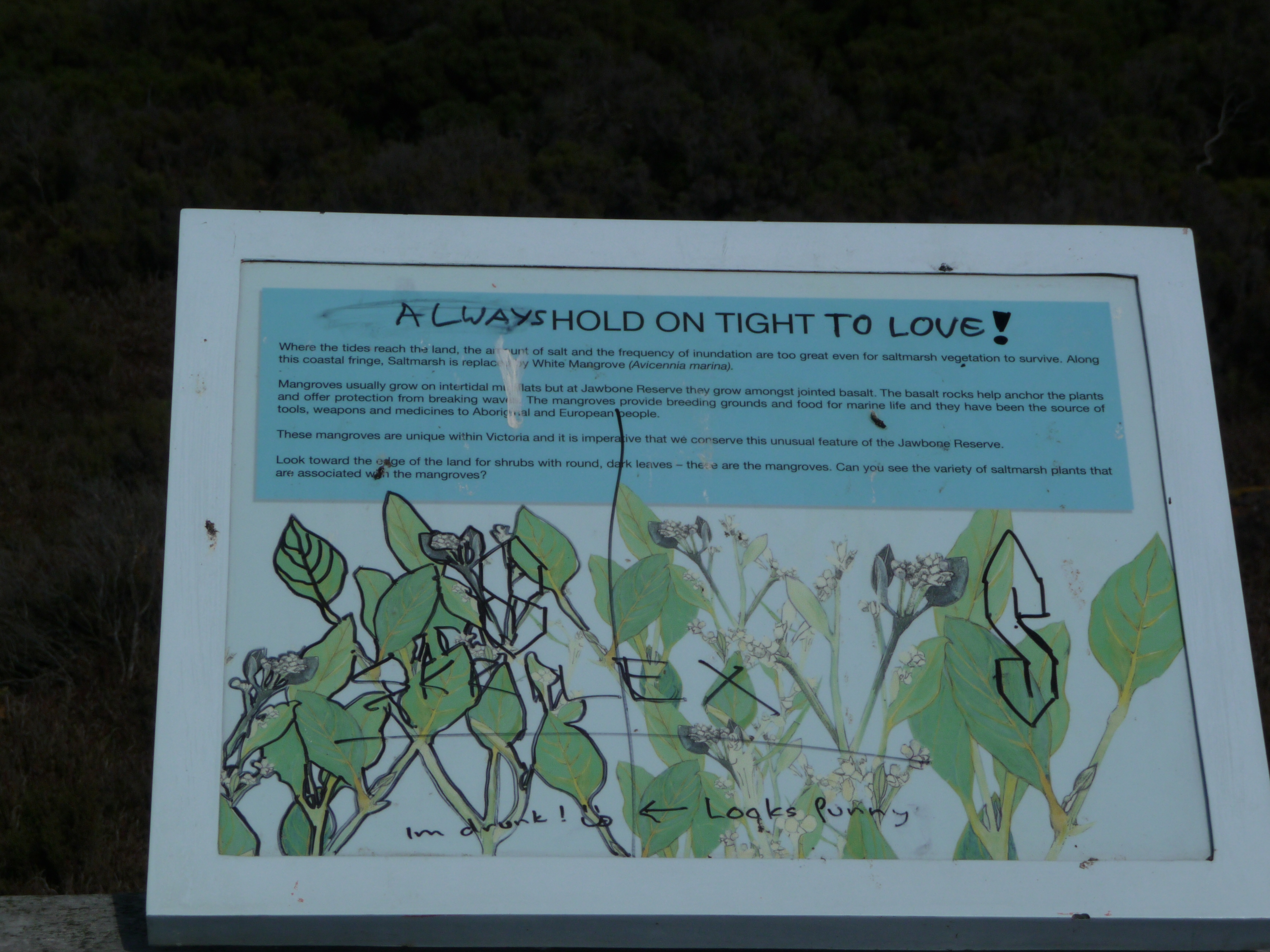
A litle graffiti goes a long way...
Brush tail possums are tourist attractions after 6pm in Williamstown, Victoria

No head for heights!

Fairy toodstool

short art